
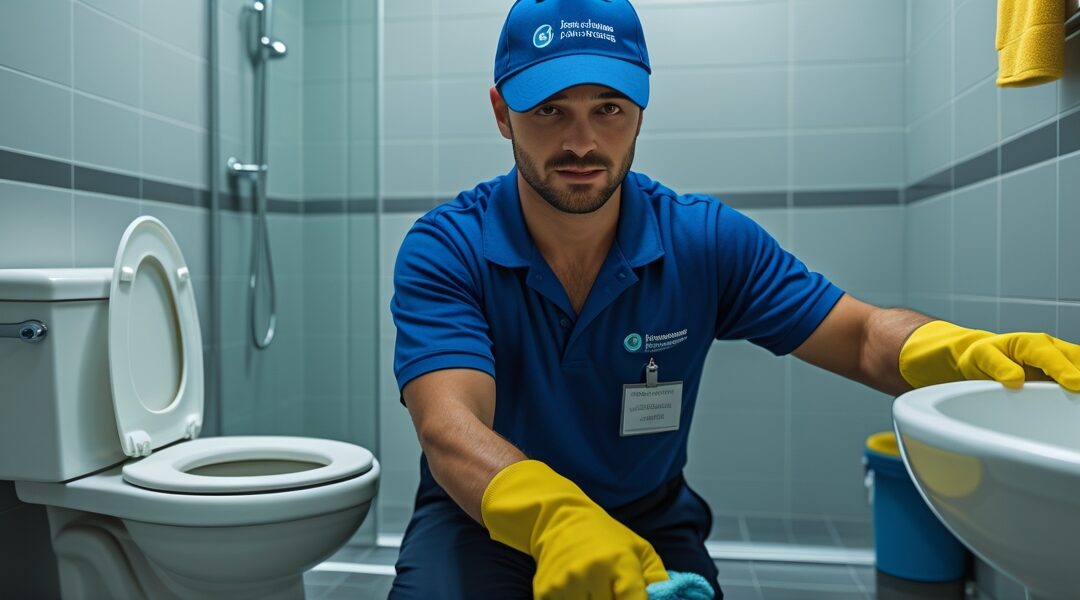
Facility Manager 12-Step Deep Toilet Cleaning Checklist — Melbourne
As a facility manager in Melbourne, maintaining clean, safe and compliant toilet facilities is essential for occupant health, compliance with Victorian OHS expectations and the reputation of your site. This comprehensive guide gives you a practical, evidence-informed 12-step deep toilet cleaning checklist you can implement today — designed for commercial offices, educational institutions, healthcare-adjacent facilities and high-traffic public washrooms across Melbourne.
Why a specialised deep toilet clean matters
Routine spot-cleaning keeps toilets looking tidy, but a true deep toilet cleaning removes biofilm, mineral deposits, odours and hidden contamination that daily cleans can miss. Deep cleaning reduces infection risk, prolongs fixture life and supports compliance with local council standards and Victorian workplace health and safety guidance. Facility managers should balance frequency, methods and product selection to match traffic levels and risk profile.
Key principles to follow before you start
Before beginning any deep clean, ensure the following are in place:
- Risk assessment completed for cleaners and building users (chemical hazards, slip risks, confined spaces).
- Cleaning schedule communicated and documented.
- Appropriate PPE available and trained staff to use it.
- Eco-conscious product choices where possible (septic-safe, biodegradable).
- Incident reporting and waste disposal procedures confirmed.
Essential PPE and equipment
Protecting cleaning staff and building users is non-negotiable. Provide and enforce:
- Nitrile gloves (chemical-resistant), eye protection and face masks if using sprays or fogging.
- Aprons or waterproof protective clothing.
- Non-slip footwear and appropriate floor signage.
- Well-maintained brushes, disposable cloths or microfibre systems, toilet bowl brushes, eco-friendly descalers, and a steam cleaner where available.
Product selection — effective and environmentally responsible
Use hospital-grade disinfectants where infectious risk is high. For general commercial facilities, consider Australian-made eco-friendly cleaners that balance potency with environmental safety: biodegradable formulations, plant-derived actives (eucalyptus, citrus), low-VOC and septic-safe labels. Avoid mixing bleach with acids or ammonia-based products.
Timing and frequency guidance
Set frequency according to traffic and risk:
- Low traffic (small offices): weekly deep clean, daily light cleans.
- Medium traffic (large offices, retail): weekly deep clean, daily thorough cleans.
- High traffic / sensitive areas (health-adjacent, public toilets, schools): multiple daily checks and sanitises, weekly or bi-weekly deep cleans; isolation rooms may require more frequent cleaning per clinical guidance.
12-Step Deep Toilet Cleaning Checklist (practical, sequential)
Follow these 12 steps each time you perform a scheduled deep clean. Highlighted key terms appear throughout as primary SEO targets for ease of scanning.
- Secure the area and prepare signage — Put out wet-floor signs and close the cubicle or facility briefly to avoid user exposure. Ensure good ventilation by opening windows or running extraction fans.
- Don PPE and gather equipment — Gloves, eye protection and aprons on. Prepare microfibre cloths, bucket with segregated clean/dirty sides, toilet brush, scaler, eco-friendly descaler and a hospital-grade disinfectant if required.
- Remove visible rubbish and consumables check — Empty bins, replace sanitary bin liners as required, restock toilet paper, soap and hand-drying provisions. Note consumables for reorder.
- Pre-treat bowl and rim — Apply a descaler or toilet bowl cleaner under the rim and allow dwell time. Mechanical agitation (brush) plus dwell helps remove limescale and biofilm.
- Clean fixtures and fittings — Wipe cisterns, flush plates, toilet seats, hinges, door handles, grab rails and dispensers with a detergent solution then follow with disinfectant. Use a separate cloth colour to avoid cross-contamination.
- Scrub bowl thoroughly — Brush under the rim and into the U-bend area. Flush while brushing to reduce residue. Use a pumice block for stubborn mineral deposits on porcelain, if appropriate.
- Tackle walls, partition and tiles — Remove splash marks, soap scum and grime from partitions, tiles and grout using suitable cleaners. For heavy soiling, steam cleaning can sanitise and remove entrenched dirt without chemicals.
- Sanitise floors and drains — Mop from cleanest to dirtiest areas, finishing near the door. Pay attention to grout lines and floor gullies; consider enzymatic drain treatments for organic build-up in drains.
- Clean and sanitise handwash basins — Descale taps, remove detergent residue, and disinfect tap handles and splashbacks. Hand hygiene areas are critical control points for pathogen spread.
- Clean accessories and vents — Clean dispensers, mirrors, coat hooks and ventilation grills. Replace or clean extraction filters according to manufacturer guidance.
- Final disinfect and odour control — Apply a final disinfectant to high-touch points with appropriate dwell time. Use odour-neutralising systems — preferably non-masking and environmentally friendly.
- Inspect, document and restock — Conduct a final inspection using a checklist, sign off, and log the deep clean in your facility records. Replenish consumables and remove wet-floor signage when safe.
Quality assurance and documentation
Record keeping is critical. Use electronic checklists, photographed evidence (where privacy allows), and incident logs for spills or contamination. Maintain SDS (Safety Data Sheets) for each product on-site and ensure staff are trained on safe handling procedures. Regular audits help identify trends and optimise frequency.
Waste disposal and sanitary considerations
Follow local council and workplace guidance for sanitary waste. Use sealed sanitary bins and arrange safe removal. Avoid flushing items that can block drains; provide clear signage and appropriately sized bins.
Training and staff safety
Invest in regular training for cleaning staff covering chemical safety, correct PPE use, manual handling, slip prevention and incident reporting. Engage cleaning staff in feedback loops to refine the checklist and spot operational issues early.
Cost, sustainability and procurement tips
Procure concentrated or refill systems to reduce packaging waste and choose Australian-made eco-certified products where possible. Evaluate total cost of ownership — labour time, consumables, and fixture longevity — rather than cheapest per-unit price.
Technology and advanced options
Where budget permits, consider touch-free fixtures, sensor-operated dispensers, steam cleaning, electrostatic sprayers and UV-C or fogging solutions for periodic sanitisation in high-risk areas. Ensure technology is compatible with your OHS and manufacturer warranties.
Middle resources and further reading
For a professional deep cleaning service model and to see how a commercial provider structures deep toilet cleaning services, see this resource on deep toilet cleaning. For broader industry guidance and articles on commercial cleaning best practice, review the Coverall insights hub at https://www.coverall.com/blog/.
Common problems and troubleshooting
- Persistent odour — Check traps and drains for buildup; consider enzymatic drain treatment and ensure adequate ventilation.
- Stubborn scale — Use approved descalers and mechanical removal; avoid abrasive methods that damage surfaces.
- Recurring contamination — Increase frequency on high-touch points, reinforce hand hygiene facilities, and audit staff adherence.
Sample weekly deep-clean rota for a medium-traffic Melbourne office
- Monday: Deep clean all toilets; restock and inspect extraction fans.
- Wednesday: Target high-traffic areas for mid-week sanitation and restock checks.
- Friday: Full clean, final disinfect and weekly documentation sign-off.
Final checklist (quick reference for facility managers)
- Schedule and documented plan in place
- PPE and SDS accessible
- Consumables adequately stocked
- Cleaning products chosen for efficacy and environmental impact
- Records and audits maintained
- Staff training current
Conclusion
Following this Facility Manager 12-Step Deep Toilet Cleaning Checklist — Melbourne will help ensure toilets are hygienic, compliant and pleasant to use. Deep cleaning is an investment in occupant health, facility longevity and regulatory compliance. Tailor the steps to your building’s usage patterns, and continually review products and methods to reflect best practice and Victorian OHS expectations.
If you would like a downloadable PDF checklist or a customised cleaning rota for your Melbourne site, contact your in-house cleaning coordinator or service provider and request documentation aligned to these steps.
https://shorturl.fm/tYePm
https://shorturl.fm/J98mh
https://shorturl.fm/BkGv6
https://shorturl.fm/FslZ4
https://shorturl.fm/gyLM3
https://shorturl.fm/70egk
https://shorturl.fm/eV4Mi
Interesting points about bankroll management! Seeing platforms like arionplay casino app download apk prioritize secure, fast transactions really impacts player confidence & tilt control, too. Good stuff!
https://shorturl.fm/4W23F
https://shorturl.fm/I9i9f
https://shorturl.fm/pAau8
https://shorturl.fm/wIwrn
https://shorturl.fm/eHE3e
https://shorturl.fm/GbNyD
https://shorturl.fm/kQ70i
https://shorturl.fm/auBHX
https://shorturl.fm/W7zng
https://shorturl.fm/kGMpI
https://shorturl.fm/RbRQ6
https://shorturl.fm/gGmKR
https://shorturl.fm/bIr57
https://shorturl.fm/6hZyI
https://shorturl.fm/0D0ip
https://shorturl.fm/70bh3
https://shorturl.fm/yrEtU
https://shorturl.fm/NNIaO
https://shorturl.fm/HN0G3
https://shorturl.fm/NUwDt
https://shorturl.fm/bt5Oj
https://shorturl.fm/mPr5m
Heard 123winclub’s where it’s at! Gotta check it out and see if the rumors are true. Join me! Click here: 123winclub
Rokubet Casino’s been my new jam. rokubetcasino.net, in case you’re wondering. Loads of games, and pretty smooth navigation. Give it a go! rokubetcasino
Sup everyone, I just used bet88comvn. I managed to cash out which is bloody good! It’s a pretty alright website: bet88comvn
https://shorturl.fm/EwFlw
https://shorturl.fm/5BENL
If you’re into slots, try slotwingacor77. I’ve had some good times there. Go to slotwingacor77 and see what you can win.
HHWSON is kinda cool. Give it a look, you might enjoy it. Check out hhwson and tell me what you think.
456betsim seems like a solid place to place your bets. Has a decent selection. Try 456betsim and see what you win.
Alright, check out m711! They got a pretty solid selection of games. Been lucky a few times, so can’t complain. Worth a look if you’re hunting for a new spot. Go check m711 out.
Futurolacasino, huh? Gave it a try last week. The sign-up bonus was pretty sweet. Won a few bucks on blackjack. Could use a better loyalty program, though. Definitely worth a look at futurolacasino
Tried out 27betgame. The site loaded quickly, which is a huge plus. Selection of esports betting is pretty good. Just needs a bit of polish on the interface. See for yourself at 27betgame
Interesting analysis! Seeing patterns in numbers is key, but responsible gaming is vital. Platforms like jlboss games offer diverse options, just remember to set limits & enjoy the fun! It’s all about balance.
The 8800betdownload process was pretty straightforward. Had the app up and running in no time. Definitely makes betting easier. Check it out for yourself: 8800betdownload.
Thinking of checking out 5sbetvip. Heard they have some nice VIP perks. Anyone have any experience with them? Let me know! In the meantime: 5sbetvip.
Hey, has anyone used 212betnet before? Looking for a new platform and their site looks slick. Let me know your thoughts. Check it out: 212betnet.
Hey all! Took a spin on 169betcasino. It’s got a decent selection of games, and the layout is easy to navigate. Might be worth a look if you’re looking for something new: 169betcasino
Hey, heard you guys talking about dailyjili2. Gave it a quick look and it seems like a good spot to get your Jili fix daily! Might be something worth keeping an eye on: dailyjili2
Yo, Jilibet and Donnalyn, huh? Checked out the jilibet play with donalyn login page. If you’re looking to play with Donnalyn on Jilibet, this is probably where you wanna be: jilibet play with donalyn login
Для работы с этим инструментом требуются качественные xrumer базы https://www.olx.ua/d/uk/obyavlenie/progon-hrumerom-dr-50-po-ahrefs-uvelichu-reyting-domena-IDXnHrG.html, содержащие актуальные площадки.