
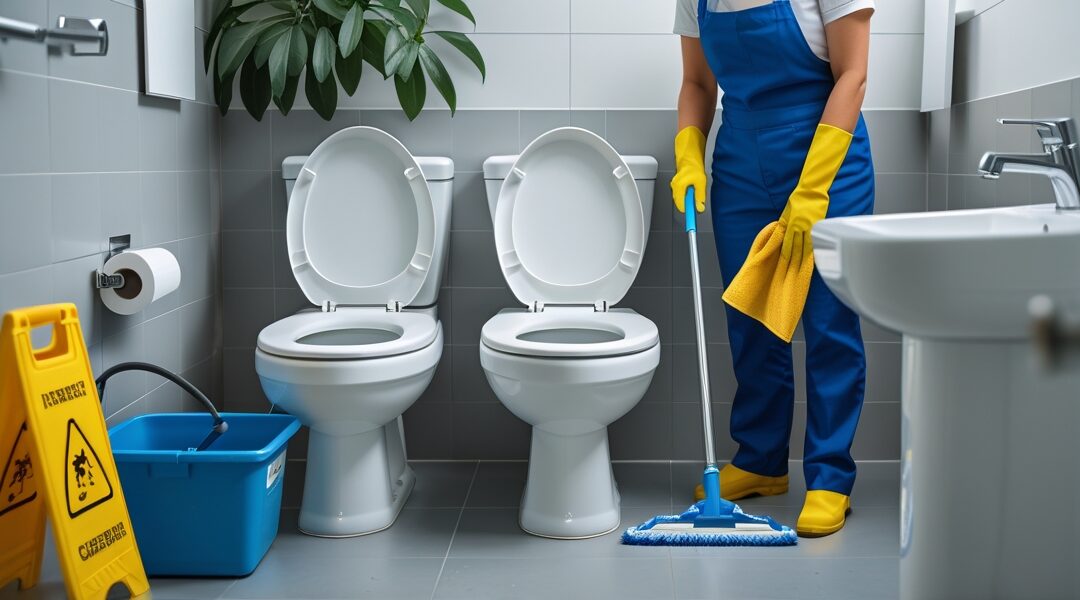
Cost Guide: Commercial Office Toilet Cleaning Prices in Melbourne
Updated for 2025 — what businesses should expect to pay for professional toilet and restroom cleaning in Melbourne, what affects price, what’s normally included, and how to get value-for-money service.
Why a dedicated toilet cleaning cost guide matters
Bathrooms and toilets are high-risk, high-touch areas that influence hygiene, staff wellbeing and client impressions. Understanding current market rates for office toilet cleaning Melbourne helps facility managers budget accurately, compare quotes and ensure compliance with workplace health standards.
Quick summary — typical price ranges (Melbourne, 2025)
Below are industry-backed ranges and typical structures you’ll see quoted by Melbourne commercial cleaners in 2025:
- Hourly rates: Generally $35–$65 per hour for standard commercial cleaning. Premium CBD rates or specialised sanitisation/deep cleans can reach $70–$100/hr.
- Per square metre : Typical commercial cleaning quotes sometimes use $2–$7 per m² depending on service level and frequency.
- Per-toilet (ballpark): Not always quoted as a standalone line item — when provided, expect roughly $15–$45 per toilet per scheduled visit depending on the extent of services (restocking, descaling, odour-control, plumbing liaison).
- One-off/deep cleans: $70–$120 per hour or fixed packages for larger bathrooms; may be priced per fixture or per bathroom.
- Weekly package examples: Small offices (≤150 m²) with basic toilet servicing 2–3x/week often fall in the $150–$350/week range; medium offices 3–5x/week commonly $350–$850/week depending on scope and number of toilets.
These ranges reflect Melbourne-wide averages and account for variations between suburbs, after-hours access and specialised hygiene requirements.
How providers price toilet cleaning — common models
Cleaning companies use several pricing models. Knowing which model your quote uses helps you compare accurately.
- Hourly rate — The cleaner is paid a set hourly rate and invoices by time taken. Best for irregular jobs or when the scope is uncertain.
- Per visit / flat fee — A fixed price per scheduled visit (e.g., $120 per visit for morning/night service). Common for recurring commercial contracts.
- Per square metre — Price quoted per m² across the whole tenancy, with toilets part of the included tasks.
- Per fixture (per toilet) — Less common but useful for multi-tenancy buildings where maintenance is split by area.
- Package pricing — Monthly or annual package that bundles regular cleaning with periodic deep cleans and supply restocking.
Key factors that affect commercial office toilet cleaning prices
Price is not arbitrary. Expect quotes to vary based on:
- Frequency — Daily or multiple times per day reduces the cost per visit. One-off or infrequent cleans are priced higher per hour or per visit.
- Number of toilets and urinals — More fixtures require more labour, consumables and attention to maintain hygiene standards.
- Type of service — Basic cleaning vs enhanced hygiene (electrostatic disinfection, antimicrobial treatments) or deep descaling will increase costs.
- Location and access — CBD locations, restricted access hours or security requirements often attract premiums.
- Consumables and restocking — Whether soap, hand towels, toilet paper and feminine hygiene disposal are supplied and stocked by the cleaner or by the client.
- Labour compliance and insurance — Reputable commercial cleaners include labour costs, insurance, training and compliance with workplace safety — these increase quotes but reduce risk.
- After-hours or emergency cleans — Additional charges typically apply for weekend, early morning or emergency sanitisation.
- Special requirements — Biohazardous waste handling, sharps disposal or healthcare-grade disinfection increases price significantly.
What’s normally included in a commercial toilet clean
Standard inclusions for a scheduled toilet clean typically cover:
- Cleaning and disinfecting toilets, urinals, sinks and taps.
- Wiping and disinfecting high-touch points (door handles, light switches, faucet handles).
- Mirrors and stainless-steel polishing.
- Sweeping and mopping with disinfectant; special attention to wet areas.
- Emptying and sanitising waste bins in the restroom area.
- Restocking of paper towel, toilet paper and soap if included in the contract.
- Spot-checks for odour, leaks and visible grime; submitting maintenance requests if issues are found.
Common exclusions (and therefore potential add-ons) include deep descaling, tile regrouting, high-level dusting, steam cleaning, and plumbing repairs.
Contract vs one-off — which should your business choose?
Deciding between a recurring contract and a one-off clean depends on need:
- Recurring contract — Best for daily operations, reducing per-visit cost, ensuring consistent standards and easy restocking of consumables. Contracts typically come with service level agreements (SLAs), scheduled inspections and performance reporting.
- One-off / ad hoc — Useful for end-of-lease cleans, post-event cleans, or an initial deep clean before onboarding a regular cleaner. One-off cleans attract higher per-hour rates and are usually quoted as fixed-price projects.
For toilets in offices, recurring contracts are commonly the most cost-effective and ensure hygiene compliance.
How to interpret quotes — a checklist
When comparing quotes, check these items so you compare apples with apples:
- Service frequency (daily/weekly/fortnightly).
- Exact tasks included for toilets (disinfection, restocking, odour control).
- Consumables: which items are included and who supplies them.
- Labour rates vs fixed visit price and whether travel or admin fees are extra.
- After-hours or weekend loadings.
- Insurance, worker background checks and compliance with Australian workplace standards.
- Contract length and termination clauses.
- Reporting and quality inspection procedures.
Money-saving tips without compromising hygiene
- Negotiate a regular contract — regular scheduling lowers cost per clean.
- Bundle services (kitchen, toilets, general areas) with one supplier for volume discounting.
- Agree on KPI-based payments — link a portion of payment to passing hygiene checks.
- Schedule cleans for non-peak hours to reduce access complications and penalties.
- Use dispensers that reduce waste (e.g., controlled soap/towel dispensers) which lowers consumable costs over time.
Real-world examples and how providers present pricing
Melbourne cleaning companies commonly present pricing in the formats described above. Example approaches you’ll see in quotes:
- Hourly quote: $45/hr for a two-person crew to service multiple bathrooms in a medium-sized office twice weekly.
- Per-visit flat fee: $180 per visit covering all toilets, kitchen area and shared spaces for a small office — with an extra charge for consumables.
- Package quote: Monthly bundle that includes daily toilet servicing, fortnightly deep cleans and consumables, invoiced monthly.
To get accurate pricing you should request an on-site inspection. Many providers will combine a site visit with a written quote that lists toilets, urinals and additional requirements.
How to select a supplier — best practice checklist
- Request evidence of insurance, SafeWork compliance and training records.
- Verify references from Melbourne-based commercial clients.
- Ask how they manage consumables, stock levels and emergency calls.
- Confirm the disinfectants and chemicals used — ensure they meet relevant Australian standards and are suitable for public restrooms.
- Insist on a clear cleaning schedule and reporting mechanism for problems (leaks, blocked fixtures, odours).
Middle resources — pricing and industry perspectives
For a local commercial cleaning solution in Melbourne, many businesses look for experienced contractors that combine daily hygiene work with reliable consumable supply. Consider getting multiple quotes and comparing the inclusions carefully. If you’d like to review a Melbourne-based cleaning services page as one example of how office cleaning is packaged and sold, visit this provider: office cleaning Melbourne.
For industry blog insights on cleaning business practices and trends that can inform negotiations and scope decisions, see this blog: https://www.vanguardcleaning.com/blog/
Sample questions to ask providers when requesting a quote
- How many toilets will be serviced and what exactly is included per visit?
- Does the price include consumables (soap, hand towels, toilet paper)? If not, what are estimated consumable costs?
- How do you handle quality assurance and incident reporting?
- Are there additional charges for after-hours or emergency cleans?
- What are the contract terms, notice periods and price escalation clauses?
- Can you provide references from Melbourne clients with similar requirements?
Typical inclusions and exclusions — a template to compare quotes
Below is a simple template to help you benchmark quotes. When comparing providers, ensure each box below is ticked or explicitly itemised in the quote:
- Inclusions: disinfect toilets/urinals, sinks, mirrors, sweep & mop with disinfectant, empty bins, restock soap and paper (if agreed), report maintenance issues.
- Possible extras: descaling, high-pressure cleaning, tile grout restoration, steam cleaning, window cleaning, plumbing repairs, biohazard removal.
- Service guarantees: frequency, KPIs, re-clean policy and inspection schedule.
Final recommendations
For most Melbourne offices, securing a regular contracted arrangement for toilet cleaning delivers the best balance of hygiene, predictability and price. Always request an on-site inspection and a written scope that lists the number of toilets and exact tasks. Compare at least three quotes and check references. If you require specialised sanitisation (for medical suites or high-risk environments), expect to pay a premium but insist on documented procedures and chemical safety data sheets.
Use the pricing ranges provided here to assess whether quotes are competitive: typical hourly rates $35–$65 for standard service, higher for deep cleans or CBD locations, and additional per-toilet charges for specialised tasks where quoted.
https://shorturl.fm/u3drf
https://shorturl.fm/L8ohV
https://shorturl.fm/gq6Zj
https://shorturl.fm/IuUAp
https://shorturl.fm/1SyMn
https://shorturl.fm/vQciJ
https://shorturl.fm/ybCAD
https://shorturl.fm/V3DND
https://shorturl.fm/X2DfX
https://shorturl.fm/jp09R
https://shorturl.fm/sa8BS
https://shorturl.fm/MNhnV
https://shorturl.fm/ajxLW
https://shorturl.fm/0U8aN
https://shorturl.fm/CQxRk
https://shorturl.fm/GOqUX
https://shorturl.fm/AZRVs
https://shorturl.fm/GJrm6
https://shorturl.fm/rGzXz
https://shorturl.fm/B63ID
https://shorturl.fm/YkblS
Yo, 99okvip is where it’s at! Been playing here for a while now and I’m loving the vibe. Games are good, withdrawals are smooth. Highly recommend checking it out 99okvip
https://shorturl.fm/4W7S8
https://shorturl.fm/dEtCL
Alright folks, lemme tell ya, 66win3 is the real deal! Tried it out last night and had a blast. Solid platform, easy to navigate, and the payouts were smooth. Definitely worth checkin’ out! Check them out here: 66win3
72betcom’s website is clean and easy to navigate. I appreciate that! Found some interesting prop bets that I haven’t seen anywhere else. Worth a look if you’re into that! Website is here: 72betcom
https://shorturl.fm/qlWE8
https://shorturl.fm/xHV3W
https://shorturl.fm/UA8Zo
Interesting read! Seeing more platforms like beeking casino prioritize PAGCOR licensing & player protection is a good sign. Responsible gaming & secure funds are key-it’s about enjoying the fun, safely! 🤔
https://shorturl.fm/BoOQo
https://shorturl.fm/MBN3M
https://shorturl.fm/Z2Ljx
https://shorturl.fm/1eujs
You made some good points there. I looked on the web for more information about the issue and found most individuals will go along with your views on this web site.
I want to to thank you for this good read!! I absolutely enjoyed every bit of it. I have you saved as a favorite to check out new things you
Hi, I log on to your blogs regularly. Your writing style is awesome, keep doing what you’re doing!
I’m not sure why but this website is loading incredibly slow for me. Is anyone else having this problem or is it a issue on my end? I’ll check back later and see if the problem still exists.
These are genuinely wonderful ideas in about blogging. You have touched some pleasant factors here. Any way keep up wrinting.
It’s hard to come by educated people in this particular subject, however, you seem like you know what you’re talking about! Thanks
Thank you for the good writeup. It in fact was a amusement account it. Look advanced to more added agreeable from you! However, how could we communicate?
Wow, this piece of writing is good, my younger sister is analyzing these kinds of things, so I am going to convey her.
I just could not leave your web site prior to suggesting that I really loved the usual information a person provide for your guests? Is gonna be again ceaselessly to check up on new posts
The packages are, nonetheless, met with heavy criticism by many ROBLOX customers as a result of its questionable look.
Ahaa, its good dialogue about this post here at this blog, I have read all that, so at this time me also commenting at this place.
Ahaa, its fastidious conversation concerning this post at this place at this web site, I have read all that, so now me also commenting at this place.
Hello to every one, the contents present at this web site are truly remarkable for people knowledge, well, keep up the good work fellows.
I’m still learning from you, but I’m improving myself. I absolutely love reading all that is written on your website.Keep the posts coming. I loved it!
First-class news indeed. My friend has been searching for this info.
You have made some really good points there. I checked on the internet for more info about the issue and found most individuals will go along with your views on this website.
I will right away clutch your rss feed as I can’t find your e-mail subscription hyperlink or e-newsletter service. Do you have any? Please let me understand in order that I may subscribe. Thanks.
Wow, this piece of writing is good, my sister is analyzing such things, thus I am going to let know her.
1001juego is what it is. Lots of options, easy to find something that suits your mood. I like the variety. Could spend hours there honestly. Check them out here: 1001juego
Lounge7777 is a nice spot to unwind and try your luck. I found the interface easy to navigate, and I actually won a little something! Definitely worth checking out if you want a relaxing experience. Give it a whirl yourself at : lounge7777
Is bn555 any good? Saw some ads and it looks promising. Don’t want to waste my time though. Tell me your experiences on bn555
Numbers are fascinating, aren’t they? Seeing trends emerge, even in games of chance… reminds me of exploring platforms like jiliph hot apk – convenient payment options like GCash are a smart move for local players! Hoping for good luck to everyone.
Новичкам стоит разобраться, как пользоваться хрумером, чтобы избежать ошибок при настройке.
Для работы с этим инструментом удобно использовать xrumer base https://www.olx.ua/d/uk/obyavlenie/progon-hrumerom-dr-50-po-ahrefs-uvelichu-reyting-domena-IDXnHrG.html, содержащую релевантные сайты.