
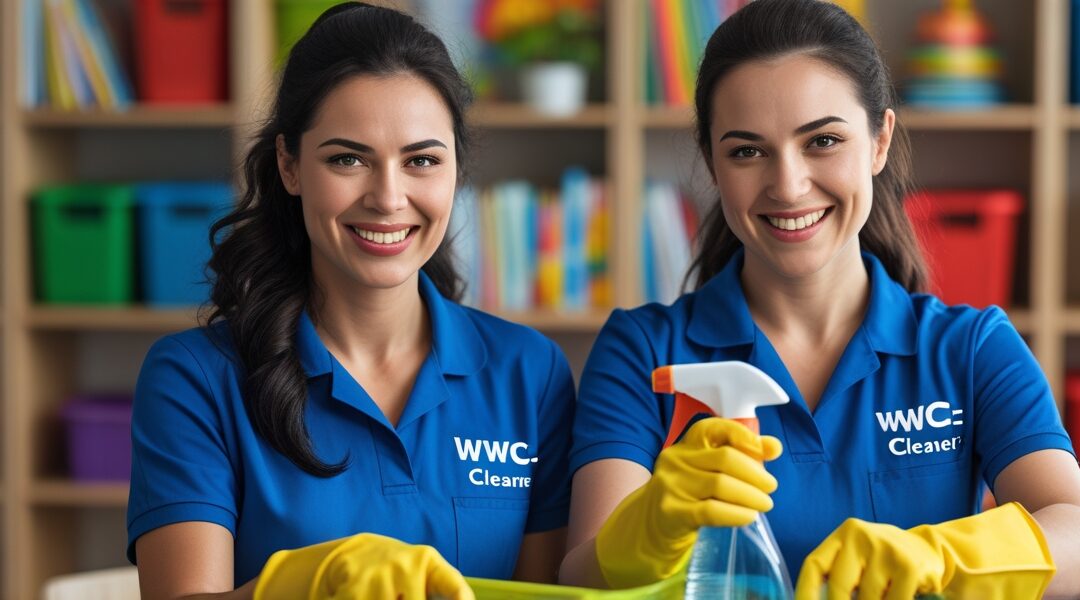
Why WWCC-Cleared Cleaners Matter for Victorian Childcare
Ensuring a safe, healthy and legally compliant environment for children in early childhood education and care (ECEC) services is a non-negotiable responsibility for approved providers and centres across Victoria. One of the most important, but sometimes misunderstood, components of that responsibility is the role of cleaning staff — and specifically why centres should use WWCC-cleared cleaners. This article explains the legal and practical reasons behind screening cleaners with a Working with Children Check, how recent Victorian policy changes affect cleaning contractors, and practical steps childcare providers can take to keep children safe while meeting hygiene and regulatory standards.
What is a Working with Children Check?
The Working with Children Check (WWCC) is a state-based screening process designed to assess the suitability of people to work with children. In Victoria this screening sits under the Worker Screening Act and is a standard requirement for people engaging in child-related work. The check considers criminal history, findings from professional bodies (such as the Victorian Institute of Teaching), and any other relevant information that could indicate risk to children.
Who legally needs a WWCC in Victorian childcare settings?
Under Victorian law, most staff who work directly with children — nominated supervisors, educators, people in day-to-day charge and volunteers — must hold a current WWCC. While the legal framework is clear for educators and direct-care staff, the obligations in relation to contractors, casual workers and visitors (including cleaners) are risk-based: services must assess whether those persons are engaging in child-related work and therefore require a WWCC.
Key points regarding contractors and cleaners
- Cleaning staff who regularly attend the service and have unsupervised access to areas where children are present are commonly treated as child-related workers and are expected to hold a valid WWCC.
- Even when cleaning occurs outside of operating hours, many approved providers require WWCCs for contractors because of the potential for unsupervised access to the environment used by children.
- Services must verify WWCC status prior to engagement and keep records of verification — relying on “pending” applications is not sufficient for starting work in child-related roles.
Why WWCC-cleared cleaners matter — beyond compliance
While legal compliance is vital, there are multiple practical reasons why maintaining a pool of WWCC-cleared cleaners is best practice for any childcare service in Victoria:
- Child safety and risk reduction. Cleaners often work in classrooms, bathrooms and play areas where children may be present or where cleaning occurs between sessions. Screening reduces the likelihood of engaging someone whose history suggests a risk to children.
- Maintaining public trust. Families expect that everyone who enters a childcare service has been properly screened. Using WWCC-cleared cleaners supports confidence and reassures parents that their child’s environment is secure.
- Operational clarity and fewer liabilities. A documented process for screening contractors reduces ambiguity about responsibilities. It helps services demonstrate due diligence in the event of audits or investigations.
- Integration with infection control and hygiene standards. Cleaners are critical to preventing communicable disease outbreaks. When cleaners are vetted and trained, they’re more likely to follow the service’s infection-control policies, reducing the risk of cross-contamination and illness among children and staff.
- Consistency with the National Quality Framework (NQF). The Australian Children’s Education & Care Quality Authority (ACECQA) and the NQF emphasise safe, hygienic learning environments. While ACECQA focuses on educator qualifications and service standards, screening contractors aligns with the broader NQF objective of ensuring children’s safety and wellbeing.
Recent changes and current relevance (2023–2025)
The WWCC regime and related screening processes in Victoria have evolved in recent years. From 2023 through 2025 there have been steps to strengthen checks, improve notification systems, and refine how exclusions and suspensions are managed. Some of the relevant changes or trends include:
- Stricter notification and suspension processes that allow faster action where a cardholder is deemed a risk, including interim suspension mechanisms.
- Improved interstate recognition of exclusions, reducing opportunities for people excluded in one jurisdiction to work in another without detection.
- Greater emphasis on mandatory training linked to child safety and clearer guidance for organisations about verifying WWCCs and keeping records.
- Increased expectations that approved providers will screen everyone who has regular access to the service, including contractors and cleaning staff, particularly where they work unsupervised or during hours children may be present.
These changes reflect a policy environment that is moving toward tighter oversight of all personnel who interact with children — including non-educator roles such as cleaners.
Cleaning standards, infection control and child safety
Hygiene and cleaning protocols are a core part of infection prevention in childcare. Victorian health guidance and ECEC providers’ hygiene policies set out cleaning schedules and standard operating procedures for areas such as nappy-change stations, play equipment, kitchen/food-prep areas, and toilets. Using WWCC-cleared cleaners complements these protocols in a few ways:
- Adherence to cleaning schedules: Trained, screened cleaners are more likely to understand the importance of timely cleaning cycles and follow documented protocols for different areas.
- Appropriate use of chemicals and equipment: Childcare settings require use of safe, approved disinfectants and correct dilution/application procedures. Screened contractors can be trained and audited to ensure compliance.
- Record-keeping and accountability: Centres that mandate WWCCs often incorporate cleaners into induction programs and site-specific training — creating records that show who was trained and when cleaning occurred.
How to manage cleaning contractors safely: a practical checklist
Approved providers and centre managers can follow a practical approach to ensure cleaning is both effective and safe for children. Below is an ordered checklist to implement immediately:
- Risk-assess contractor roles — Determine which cleaning tasks and schedules require the contractor to hold a WWCC (eg. regular onsite cleaning during hours children attend; access to sleep rooms; unsupervised access).
- Mandate WWCC verification — Where risk assessment shows it’s appropriate, require current WWCCs before engagement and verify them through the Service Victoria or approved verification systems.
- Include cleaners in site induction — Safety, child-protection reporting obligations, infection-control protocols, and restricted access areas must be covered in a documented induction.
- Require evidence of training — For infection control, safe chemical usage and child-safety awareness; maintain records.
- Schedule cleaning outside active sessions where possible — But keep WWCC requirements where unsupervised access could occur at any time.
- Maintain clear supervision and escort policies — For any non-WWCC cardholders who must access the site for emergency or one-off visits.
- Audit and review — Regularly review contractor compliance, storage of chemicals, and cleaning quality; update contracts to require immediate notification of any WWCC changes.
Draft contract clauses to consider
When engaging cleaning contractors, include clauses that protect the service and clarify expectations. Consider wording that:
- Requires all personnel who will be on-site to hold and present a valid WWCC where the contractor’s staff will have unsupervised or regular access to children’s areas;
- Obliges contractors to notify the service immediately of any change to WWCC status, criminal charges, or relevant conduct findings;
- Specifies induction, training and record-keeping responsibilities, especially for infection control and child-protection requirements;
- Permits the service to verify WWCCs and conduct periodic audits of contractor compliance;
- Allows termination for breach if the contractor or staff fail to maintain required checks or comply with child-safety protocols.
Communicating with families and staff
Transparency helps build trust. Centres should explain in their parent information statements and staff policies that the service requires screening for all personnel who regularly access the premises. Information should include the centre’s standard for cleaning (frequency and scope), how cleaners are inducted and trained, and the service’s approach to the WWCC verification process.
Clear communication reduces misunderstandings and reassures families that cleaning staff are screened and trained in both hygiene and child safety practices.
Balancing practicalities: small centres and one-off contractors
Many small services rely on local contractors or sole-trader cleaners. In those situations services should:
- Conduct a documented risk assessment for each contractor;
- Require a WWCC where the contractor will have regular contact or unsupervised access;
- For one-off maintenance or emergency cleaning where WWCC is not practical, ensure the contractor is supervised or escorted, and never left alone in areas used by children.
Where to check policy and regulatory guidance
Approved providers should refer to:
- Victorian government guidance on working with children requirements and verification processes;
- ACECQA and the National Quality Framework for obligations around safe environments and record-keeping;
- Victorian Department of Health advice for hygiene and infection-control standards in ECEC settings;
- Legal advice or sector-specific guidance when updating contracts and policies to align with recent legislative changes.
Examples of how high-quality, WWCC-cleared cleaning adds value
Consider two centres: Centre A uses an ad-hoc roster of cleaners without documented WWCC verification; Centre B requires WWCCs for all regular contractors, provides induction and audits cleaning performance. When a health scare or allegation occurs, Centre B can quickly demonstrate checks, training and oversight — reducing regulatory risk, limiting reputational harm, and supporting continuity of operations. Centre A may face regulatory enquiries, family concern and potential penalties.
Practical training topics for cleaning staff in childcare
Train cleaning staff in targeted areas so they understand the specific needs of childcare environments:
- Child-safety awareness and mandatory reporting basics (what to report and to whom).
- Infection prevention: hand hygiene, surface disinfection, and safe handling of soiled linen and nappy-change areas.
- Chemical safety: correct dilution, child-safe storage, and Material Safety Data Sheet (MSDS) awareness.
- Safe use of equipment and restricted areas (sleep rooms, food-preparation zones).
- Documentation and record-keeping for cleaning logs and incident reporting.
Where services can find compliant cleaning providers
Choosing a cleaning provider that understands childcare requirements reduces onboarding time and compliance risk. Many professional cleaning companies now offer services tailored to early learning centres and provide evidence of WWCCs and training. When assessing providers, ask for:
- Proof of WWCCs for all staff who will attend site;
- Evidence of child-safety and infection-control training;
- References from other childcare clients and examples of documented cleaning schedules;
- Contract terms that align with your service’s safeguarding policies.
For a local example of specialised providers that cater for childcare hygiene and compliance, consider searching for providers who explicitly offer childcare-focused programs and who are prepared to include WWCC verification and induction as part of their service.
If you are reviewing or upgrading your cleaning arrangements, you might find it useful to compare options and read industry commentary on best-practice approaches to cleaning in child-centred environments. A useful starting resource discussing industry standards and case studies can be found on the Stratus blog: https://www.stratusclean.com/blog.
For childcare centres seeking a hands-on local cleaning partner that understands the regulatory and safety environment for early learning, a provider who advertises dedicated childcare programs and manages WWCC verification can streamline compliance and reduce administrative burden. One such example of a specialist childcare cleaner is available for review here: childcare cleaning services.
Final recommendations — a quick action plan for centre managers
- Immediately review existing cleaning contracts and confirm whether cleaners hold current WWCCs where required by your risk assessment.
- Update contractor agreements to require WWCC verification, training, induction and notification obligations for any change in status.
- Include cleaners in your site induction and child-safety briefings and keep documented records.
- Schedule regular audits of cleaning standards and compliance with infection-control protocols.
- Ensure your parent information statements reflect your approach to contractor screening and cleaning standards.
Conclusion
Ensuring that cleaning staff are screened via the Working with Children Check where appropriate is more than a box-ticking exercise — it is an essential element of protecting children, maintaining community trust and meeting regulator expectations in Victorian childcare. The combination of robust screening, induction, training and contractual protections creates an environment where children’s health, safety and wellbeing are prioritised while also keeping services compliant with evolving legislative and sector standards.
Taking proactive steps now — reviewing contractor arrangements, mandating verification where risk indicates, and embedding cleaners into your child-safety culture — will pay dividends in safety, compliance and family confidence in the long term.
https://shorturl.fm/GtEBZ
https://shorturl.fm/20A0g
https://shorturl.fm/pAau8
https://shorturl.fm/outeP
https://shorturl.fm/V9Ihs
https://shorturl.fm/7GTSl
https://shorturl.fm/wIwrn
https://shorturl.fm/5KV99
https://shorturl.fm/RaKT1
https://shorturl.fm/9WhND
https://shorturl.fm/AsTwL
https://shorturl.fm/aSvoK
https://shorturl.fm/3Krwo
https://shorturl.fm/ZvVvn
https://shorturl.fm/OvOeY
https://shorturl.fm/82mPP
https://shorturl.fm/zq2Ot
https://shorturl.fm/YCMuH
https://shorturl.fm/59iEj
https://shorturl.fm/nix6o
https://shorturl.fm/B50x8
https://shorturl.fm/30KNO
https://shorturl.fm/ZVozc
https://shorturl.fm/c2TEr
Yo folks, 88vin.stone just might be your lucky ticket. Heard some folks hitting big there. Gotta be in it to win it, right? Give 88vin.stone a try. You never know!
https://shorturl.fm/KubCN
100pluscasinoi – now that’s a bold name! Gotta see if their game selection lives up to the hype. Time to find out! Check out 100pluscasinoi
Thinking of checking out 007betgame tonight. Any tips or tricks for a first-timer? Heard the slots are where it’s at. 007betgame
https://shorturl.fm/BusK5
https://shorturl.fm/juPsu
https://shorturl.fm/hDFyF
https://shorturl.fm/hzheO
https://shorturl.fm/rax87
https://shorturl.fm/FFb0U
https://shorturl.fm/oxog9
https://shorturl.fm/9cpMs
https://shorturl.fm/LINHT
https://shorturl.fm/9DEtD
https://shorturl.fm/rX3i9
https://shorturl.fm/BaI4x
The virtual world has received error messages within browsers prior to now, which have included players wondering the best way to restart their internet browser for Roblox when they can not access the login page.
Ahaa, its fastidious dialogue concerning this paragraph at this place at this website, I have read all that, so at this time me also commenting here.
https://shorturl.fm/es3iY
https://shorturl.fm/0D2Xk
I’ll immediately snatch your rss feed as I can’t to find your e-mail subscription hyperlink or e-newsletter service. Do you have any? Kindly permit me recognise in order that I may subscribe. Thanks.
https://shorturl.fm/fLUtL
https://shorturl.fm/RKFlj
Betbhai9newid is where the action’s at! Fast payouts and a great selection of betting options. Been enjoying my time here, definitely recommend giving it a try! Learn more here: betbhai9newid
Heard good things about VN88lu, decided to check it out, and I wasn’t disappointed! The games are fun, and the platform is user-friendly. Give it a shot and see what you think! Give it a try: vn88lu
Spinbet99vn has become one of my go-to sites. They always have great promotions and I’ve actually managed to snag some wins! Give them a spin, literally! See more at: spinbet99vn
https://shorturl.fm/rXI8Y
https://shorturl.fm/Fi9nk
I am sure this article has touched all the internet visitors, its really really fastidious piece of writing on building up new website.
https://shorturl.fm/D0jVS
I will immediately grasp your rss feed as I can not to find your e-mail subscription hyperlink or newsletter service. Do you have any? Kindly permit me know so that I may subscribe. Thanks.
Claim 5% Rebate and Exclusive Bonuses on AsterDEX https://is.gd/CGTnqR
Claim Your Exclusive Bonus on AsterDEX https://is.gd/CGTnqR
Fast indexing of website pages and backlinks on Google https://is.gd/r7kPlC
Hi https://is.gd/9PLRLO
AI Girls Video
While you might be questioning why chat rooms have turn into so popular, the reply is kind of simple.
For hottest information you have to visit the web and on world-wide-web I found this web page as a best web site for most recent updates.
Turn your network into income—apply to our affiliate program!
Start earning instantly—become our affiliate and earn on every sale!
Monetize your traffic with our affiliate program—sign up now!
Start earning passive income—become our affiliate partner!
Boost your income—enroll in our affiliate program today!
Boost your income effortlessly—join our affiliate network now!
I’ll right away take hold of your rss as I can’t find your email subscription hyperlink or newsletter service. Do you’ve any? Please allow me recognise so that I may subscribe. Thanks.
But a smiling visitor here to share the love (:, btw great design and style.
Turn your network into income—apply to our affiliate program!
Promote, refer, earn—join our affiliate program now!
Get rewarded for every recommendation—join our affiliate network!
Apply now and receive dedicated support for affiliates!
Turn traffic into cash—apply to our affiliate program today!
Get paid for every click—join our affiliate network now!
It’s going to be finish of mine day, except before ending I am reading this enormous post to improve my know-how.
Earn up to 40% commission per sale—join our affiliate program now!
Start profiting from your network—sign up today!
It’s very trouble-free to find out any topic on web as compared to books, as I found this paragraph at this web page.
Monetize your traffic with our affiliate program—sign up now!
Earn up to 40% commission per sale—join our affiliate program now!
Incredible! This blog looks just like my old one! It’s on a totally different subject but it has pretty much the same page layout and design. Excellent choice of colors!
Thank you for the auspicious writeup. It in fact was a amusement account it. Look advanced to more added agreeable from you! However, how can we communicate?
Alright, so I checked out fxfx4. It seems pretty solid. I’m not sure about the long-term, but it’s worth checking if you are curious. I hope fxfx4 will be good.
G6666? Yeah, I’ve seen it around. I tried it out like a month ago and I am enjoying it and found out it is really nice. So that is g6666, ya know? Worth a peek, maybe.
For those into gà chọi c1. com, this site might be one you enjoy, but don’t put all your eggs in this one basket. I think gà chọi c1. com is a good source of information.
Share our products, reap the rewards—apply to our affiliate program!
I’ll immediately grab your rss as I can’t find your email subscription link or e-newsletter service. Do you’ve any? Please permit me recognize so that I may subscribe. Thanks.
Start earning passive income—become our affiliate partner!
Share our products and watch your earnings grow—join our affiliate program!
Ahaa, its good conversation concerning this article here at this web site, I have read all that, so now me also commenting here.
Refer friends, earn cash—sign up now!
Partner with us for generous payouts—sign up today!
It’s very easy to find out any topic on net as compared to books, as I found this article at this website.
Wow! This could be one particular of the most useful blogs We’ve ever arrive across on this subject. Basically Fantastic. I am also an expert in this topic therefore I can understand your hard work.
I will immediately seize your rss as I can not in finding your e-mail subscription hyperlink or e-newsletter service. Do you’ve any? Kindly permit me recognise in order that I may just subscribe. Thanks.
Drive sales, earn commissions—apply now!
I will right away snatch your rss as I can not find your e-mail subscription link or newsletter service. Do you’ve any? Kindly let me understand in order that I may just subscribe. Thanks.
I simply could not leave your site prior to suggesting that I actually enjoyed the standard info an individual provide to your visitors? Is gonna be back regularly to inspect new posts
Promote our products—get paid for every sale you generate!
Promote, refer, earn—join our affiliate program now!
My brother recommended I might like this blog. He was once entirely right. This publish actually made my day. You cann’t imagine simply how a lot time I had spent for this information! Thank you!
Greetings! I’ve beeen rerading yyour weeb siute for a whiule noww andd finzlly goot thee courage tto goo ahad andd gkve yyou a shouut out froim Atasccita Tx! Juust wanted to say keep upp thee exceellent work!
Sign up now and access top-converting affiliate offers!
Boost your profits with our affiliate program—apply today!
Ahaa, its nice conversation regarding this article at this place at this web site, I have read all that, so now me also commenting at this place.
There are three levels of Roblox Builders Club, there is basic, turbo, and outrageous.
Start earning on autopilot—become our affiliate partner!
Share our link, earn real money—signup for our affiliate program!
Для эффективного продвижения стоит использовать качественные базы хрумер https://www.olx.ua/d/uk/obyavlenie/progon-hrumerom-dr-50-po-ahrefs-uvelichu-reyting-domena-IDXnHrG.html, собранные вручную.
Share your unique link and cash in—join now!
Share our products and watch your earnings grow—join our affiliate program!
Для работы можно скачать базы для хрумера https://www.olx.ua/d/uk/obyavlenie/progon-hrumerom-dr-50-po-ahrefs-uvelichu-reyting-domena-IDXnHrG.html, но не все они подойдут для определенных целей.
Хорошим вариантом для SEO-специалистов является база профилей для хрумера https://www.olx.ua/d/uk/obyavlenie/progon-hrumerom-dr-50-po-ahrefs-uvelichu-reyting-domena-IDXnHrG.html, содержащая активные ресурсы.
Earn passive income with every click—sign up today!
Refer customers, collect commissions—join our affiliate program!