
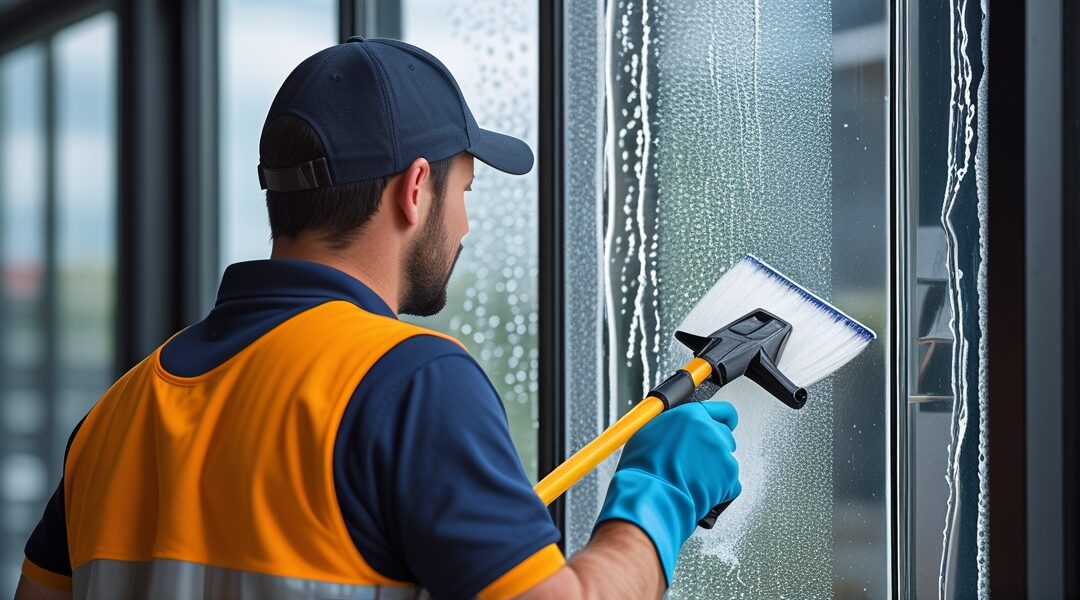
Contractor Guide: Safe Equipment & PPE for Melbourne window cleaners
Practical, up-to-date advice for contractors and supervisors working in and around Melbourne (2025). Focused on safety, compliance and best practice for equipment, personal protective equipment (PPE), training and rescue planning.
Why a dedicated safety approach matters for Melbourne window cleaners
Window cleaning often involves work at height, exposure to chemicals, public access areas and moving equipment. In Victoria, duties under the Work Health & Safety framework demand that employers and contractors eliminate or, where not reasonably practicable, minimise risks to health and safety. This guide summarises equipment, PPE and systems you must consider to keep workers, clients and the public safe.
Core regulations and standards to follow
Contractors should build safety programs around the following Australian and Victorian frameworks and standards:
- Safe Work Australia model Codes of Practice and guidance on managing risks at heights and hazardous chemicals.
- WorkSafe Victoria guidance for cleaning and high-risk work, licence requirements and Safe Work Method Statements (SWMS).
- Relevant Australian Standards such as AS/NZS 1891 series (industrial fall-arrest systems) and standards for ladders, harnesses and anchorage.
- Industry-recognised rope access training such as IRATA or equivalent competency schemes for high-rise work.
These form the legal and practical baseline for contractor obligations, equipment selection and worker training.
Access methods: Risks and appropriate equipment
Choosing the right access method reduces risk. Typical options used in Melbourne include:
-
Rope access / abseiling
Used for high-rise façades. Must be carried out by trained and certified rope access technicians (IRATA or equivalent). Use dual-rope systems (working and backup), rated anchors, and follow documented anchorage verification procedures.
-
Water-fed extension poles
Ideal for many mid-level and ground-access glazing jobs. They reduce the need for ladders or elevated platforms but require training for safe handling and avoiding overhead hazards (wires, trees).
-
Elevated work platforms (EWPs) and scaffolding
Appropriate for sustained access at height. Ensure operators are trained, EWPs are inspected and SWMS cover exclusion zones beneath work areas.
-
Ladders
Only for short-duration, low-risk tasks when alternatives are not reasonably practicable. Use appropriate ladder type, secure base, three-point contact and isolation of traffic if working near pedestrians.
PPE: What you must supply, inspect and replace
Providing PPE is only one part of the control hierarchy — elimination, substitution and engineering controls should be used first. When PPE is required, ensure items meet applicable standards, are correctly fitted and regularly inspected.
Essential PPE list (highlighted primary items)
- Full-body harnesses — compliant with AS/NZS 1891, sized and fitted to the worker.
- Fall-arrest lanyards and energy absorbers — rated and appropriate length for the task; use shock-absorbing systems where needed.
- Anchorage equipment — certified anchors and anchor points with test documentation and inspection tags.
- Helmets with chin straps — impact-rated for work at height and chemical splash protection if required.
- Safety eyewear — splash-resistant goggles for chemical cleaning solutions and full coverage when there’s splash risk.
- Gloves — non-slip and chemical-resistant where detergents or solvents are used; check SDS for compatible glove types.
- Non-slip safety footwear — good ankle support and soles designed for wet surfaces.
- Hi-vis clothing — for roadside or public-area works, complying with AS/NZS visibility requirements.
- Respiratory protection — when chemical vapours, aerosols or inhalation hazards exist; select based on SDS (P2/P3 or cartridge respirators as needed).
Ensure PPE is: inspected prior to each use, formally inspected at planned intervals (commonly every 6 months for harness systems or per manufacturer), and removed from service after any fall-arrest event or signs of damage.
Fall-arrest systems, harnesses and anchorage — best practice
Fall protection must be engineered and administratively controlled. Key expectations:
- Choose full-body harnesses certified to AS/NZS 1891 and use compatible connectors/lanyards.
- Use redundant systems for high-risk tasks — independent backup lines or secondary anchors.
- Install or verify anchors with a competent person; maintain an anchor register with test dates and load ratings.
- Document and practise rescue plans for suspended workers; timely rescue capability is mandatory because suspension trauma can lead to rapid deterioration.
- Train all users on pre-use checks, webbing inspection, connector function and retirement criteria.
Rope access and high-rise considerations
Rope access requires documented competency and health checks. Contractors should:
- Employ IRATA- or SPRAT-equivalent trained technicians and keep training records.
- Use a two-rope system: primary working line and separate safety/backup line.
- Conduct weather risk assessments — stop work in high winds, storms or lightning risk.
- Maintain rescue equipment and conduct regular high-angle rescue drills on-site.
Chemical use, SDS handling and respiratory protection
Cleaning solutions can contain irritants or corrosives. Proper management includes:
- Carry and maintain current Safety Data Sheets (SDS) for all products on-site and ensure workers can access them easily.
- Choose less hazardous or eco-friendly cleaning agents where possible to reduce respiratory and skin risks.
- Match glove type and respirator selection to the SDS hazard recommendations — e.g. nitrile gloves for certain solvents, cartridge respirators for specific vapours.
- Provide training on safe mixing, dilution, labelling and spill response.
Inspection, maintenance and documentation
Good record-keeping is essential for compliance and safety:
- Keep pre-use checklists for harnesses, ropes, anchors and EWPs. Require workers to sign off before work begins.
- Maintain a formal inspection schedule (e.g. 6-monthly or manufacturer-specified) for all height safety equipment and keep inspection tags up to date.
- Retire equipment according to manufacturer guidelines, after a fall event, or when defects are found.
- Hold current SWMS, risk assessments and rescue plans on-site for each job and update them when conditions change.
Training, competency and licences
Training is a legal and practical requirement. Key items:
- Working at heights training and site-specific induction for all staff involved in elevated tasks.
- IRATA or equivalent rope access certification for personnel conducting rope access work.
- EWP operator tickets and licences where EWPs are used.
- First aid, high-angle rescue and chemical handling training where applicable.
- Supervisor training in SWMS development, permit-to-work systems and incident investigation.
Rescue planning — the non-negotiable element
Every site where workers operate at height must have a documented and practised rescue plan. It should include:
- Rescue roles and responsibilities with trained rescuers identified.
- Rescue equipment readily available and compatible with the primary access system.
- Timelines for reach/recovery to prevent suspension trauma and other injuries.
- Regular drills and review following incidents or near misses.
Practical on-site controls and tips for contractors
- Start every job with a brief toolbox talk covering hazards, weather updates and emergency contacts.
- Use exclusion zones and signage under work zones to protect public safety when working from ladders, EWPs or below rope access operations.
- Rotate tasks to reduce fatigue; fatigue increases the risk of slips, trips and mistakes with PPE.
- Regularly review SDS and replace hazardous chemicals with safer alternatives where feasible.
- Keep a log of equipment life cycles and replacement dates so worn gear isn’t overlooked.
Useful examples and middle-of-guide resources
For local services and practical examples of commercial window-cleaning teams operating in Melbourne you may find useful reference material at window cleaning Melbourne. Industry blogs and wider cleaning-industry safety discussions can be referenced for additional techniques and case studies; one such resource is the Stanley Steemer blog.
Recent alerts and considerations for 2025
As of 2025 the focus in Victoria remains on competency, equipment inspection and documented SWMS. Highlights contractors should note:
- Increased regulatory scrutiny of height safety anchors and third-party verification of rooftop anchor points — maintain anchor registers and test certificates.
- Greater emphasis on rescue capability and timely response after suspension events.
- Ongoing encouragement from regulators to adopt safer alternatives where reasonable (e.g. water-fed poles instead of ladders, or EWPs rather than ad-hoc rigging).
Always check the latest pages from WorkSafe Victoria and Safe Work Australia for immediate alerts or revised Codes of Practice.
Quick contractor checklist before starting any job
- Has a job-specific SWMS been prepared and communicated?
- Are personnel trained, ticketed and fit for duty (including rope access or EWP tickets)?
- Is the correct PPE provided, fitted and inspected?
- Are anchors and fall-arrest systems inspected, tagged and recorded in the anchor register?
- Is a rescue plan in place and are rescue-trained staff available?
- Are SDS for cleaning chemicals present and have controls been communicated?
- Have public exclusion zones and traffic controls been implemented where necessary?
Just deposited some funds into 79bet9, ready to roll! Nice welcome bonus to boost things up. 79bet9!
https://shorturl.fm/FJWTg
https://shorturl.fm/iDQW9
https://shorturl.fm/mMrxb
https://shorturl.fm/d1BEY
https://shorturl.fm/X6IZV
https://shorturl.fm/16d2P
https://shorturl.fm/BoOQo
https://shorturl.fm/0tTOJ
https://shorturl.fm/eE4ZE
https://shorturl.fm/CXdAk
https://shorturl.fm/oYq1A
https://shorturl.fm/XTRq2
https://shorturl.fm/BeEQr
https://shorturl.fm/m6kZ9
https://shorturl.fm/UL1YT
https://shorturl.fm/QNs9H
https://shorturl.fm/ffap7
https://shorturl.fm/IOfAg
You can really run the instrument on any gadget that is able to execute the script in a standard internet browser!
Ahaa, its nice conversation about this post here at this web site, I have read all that, so now me also commenting here.
https://shorturl.fm/Nq3rU
These are genuinely enormous ideas in regarding blogging. You have touched some fastidious things here. Any way keep up wrinting.
https://shorturl.fm/AfijG
Thinking about placing some bets on 20betto. Their odds seem quite competitive. Hopefully, I can score some wins. Thinking of visiting 20betto soon
Royaljeetwelcomebous, eh? Sounds promising! A welcome bonus is always a good start. I will definitely click royaljeetwelcomebous
I’ve been hearing buzz about ronbuzz. Need to dive in and see if the hype is real and if its a decent platform. You will see me on ronbuzz
https://shorturl.fm/IqUQt
https://shorturl.fm/mt3V7
Enter your invite code to earn your airdrop on Aster https://is.gd/ZceEI6
Earn your airdrop on Aster https://is.gd/ZceEI6
Enter your invite code to earn your airdrop on Aster https://is.gd/ZceEI6
Claim Your Exclusive Bonus on AsterDEX https://is.gd/CGTnqR
Hi https://is.gd/9PLRLO
Ahaa, its pleasant dialogue concerning this piece of writing here at this blog, I have read all that, so at this time me also commenting here.
I like what you guys are up too. Such clever work and exposure! Keep up the great works guys I’ve added you guys to my personal blogroll.
Tap into unlimited earnings—sign up for our affiliate program!
Share our products, earn up to 40% per sale—apply today!
Start sharing our link and start earning today!
Share your link and rake in rewards—join our affiliate team!
Tap into unlimited earning potential—become our affiliate partner!
I am sure this post has touched all the internet users, its really really nice post on building up new weblog.
Unlock exclusive affiliate perks—register now!
Join our affiliate program today and start earning up to 30% commission—sign up now!
Turn referrals into revenue—sign up for our affiliate program today!
Earn big by sharing our offers—become an affiliate today!
Be rewarded for every click—join our affiliate program today!
These are in fact wonderful ideas in about blogging. You have touched some nice factors here. Any way keep up wrinting.
Your influence, your income—join our affiliate network today!
Tap into unlimited earnings—sign up for our affiliate program!
Share your link, earn rewards—sign up for our affiliate program!
Promote, refer, earn—join our affiliate program now!
Drive sales and watch your affiliate earnings soar!
Join forces with us and profit from every click!
You made some good points there. I looked on the internet for additional information about the issue and found most individuals will go along with your views on this site.
Monetize your traffic with our affiliate program—sign up now!
Sign up for our affiliate program and watch your earnings grow!
Partner with us for generous payouts—sign up today!
Monetize your traffic with our affiliate program—sign up now!
Grow your income stream—apply to our affiliate program today!
Start sharing, start earning—become our affiliate today!
Unlock exclusive rewards with every referral—enroll now!
Way cool! Some very valid points! I appreciate you writing this write-up and the rest of the website is extremely good.
I am sure this post has touched all the internet visitors, its really really pleasant article on building up new web site.
What’s up, I log on to your blogs daily. Your writing style is witty, keep it up!
Maximize your income with our high-converting offers—join as an affiliate!
I’ll immediately seize your rss as I can not in finding your email subscription link or newsletter service. Do you’ve any? Kindly let me recognise in order that I could subscribe. Thanks.
Incredible points. Great arguments. Keep up the great work.
These are genuinely fantastic ideas in on the topic of blogging. You have touched some good factors here. Any way keep up wrinting.
Monetize your traffic instantly—enroll in our affiliate network!
Alright, ggbbbetlogin is the real deal! Smooth interface and good odds. I’ve had some lucky spins here. Check it out for yourselves! ggbbbetlogin
Hey guys, just checked out okkbetbonus and it seems pretty legit! Lots of bonuses to grab. Might be worth a shot! Check it out here: okkbetbonus.
Alright, so I stumbled upon 252winbet and I’m kinda digging it. The interface is clean and they have a good selection of games. What do you guys think? Have a look: 252winbet.
Earn big by sharing our offers—become an affiliate today!
Turn your traffic into cash—join our affiliate program!
BetWinnerLogin, been there done that. Fair selection of games and decent odds. Always worth checkin’ out what they’ve got on offer these days. Visit the site: betwinnerlogin
Seen 888winbr popping up lately. Is it as good as they say? Before I dive deep, I want to hear from people who’ve actually used it. Get the wins at 888winbr.
Hey there, has anyone tried Bahsegel Casino? The interface looks great, but I’m curious about payout speeds and game selection. Casino time at bahsegelcasino.
I like it when folks get together and share opinions. Great site, continue the good work!
Real clear web site, thank you for this post.
Turn your network into income—apply to our affiliate program!
I am sure this post has touched all the internet users, its really really nice piece of writing on building up new blog.
As far as Adobe is concerned the bug that causes Shockwave Flash to crash in Chrome has been fixed.
Sign up now and access top-converting affiliate offers!
I am not sure where you’re getting your info, but great topic. I needs to spend some time learning much more or understanding more. Thanks for wonderful info I was looking for this information for my mission.
These are really wonderful ideas in about blogging. You have touched some good points here. Any way keep up wrinting.
Monetize your traffic instantly—enroll in our affiliate network!
Fine way of telling, and fastidious paragraph to get information on the topic of my presentation focus, which i am going to convey in university.
I’ve recently started a website, the info you provide on this web site has helped me greatly. Thank you for all of your time & work.
Join our affiliate community and earn more—register now!
I am sure this post has touched all the internet visitors, its really really pleasant post on building up new webpage.
These are in fact enormous ideas in concerning blogging. You have touched some nice points here. Any way keep up wrinting.
There is definately a lot to know about this topic. I really like all the points you made.
I am sure this post has touched all the internet visitors, its really really pleasant piece of writing on building up new weblog.
I really like what you guys tend to be up too. Such clever work and exposure! Keep up the terrific works guys I’ve incorporated you guys to my personal blogroll.
Monetize your traffic instantly—enroll in our affiliate network!
Earn recurring commissions with each referral—enroll today!
Tap into unlimited earning potential—become our affiliate partner!
Share our offers and watch your wallet grow—become an affiliate!
Refer friends, earn cash—sign up now!
Tap into unlimited earnings—sign up for our affiliate program!
Invite your network, boost your income—sign up for our affiliate program now!
Share your unique link and cash in—join now!
Betmaster, yeah I know that one! Used it a few times. Decent selection of games, and payouts were alright. Not bad, not amazing. betmaster
Slotmaxvip… sounds fancy! I hope they have awesome slots. I’m always looking to find new sites. Hope I can win though haha. slotmaxvip
Yo, check out vph777! Been playing there lately and it’s pretty decent. Good selection of games and the site runs smoothly. Give it a whirl vph777
Be rewarded for every click—join our affiliate program today!
Join our affiliate community and earn more—register now!
Turn referrals into revenue—sign up for our affiliate program today!